Server-owned gates
A client cannot rename, omit or make a required check optional simply to obtain READY.
ProofLatch evaluates one bounded release packet against server-owned policy. Deterministic code decides BLOCKED or READY; GPT-5.6 can explain the result and prepare a small Codex repair brief without changing it.
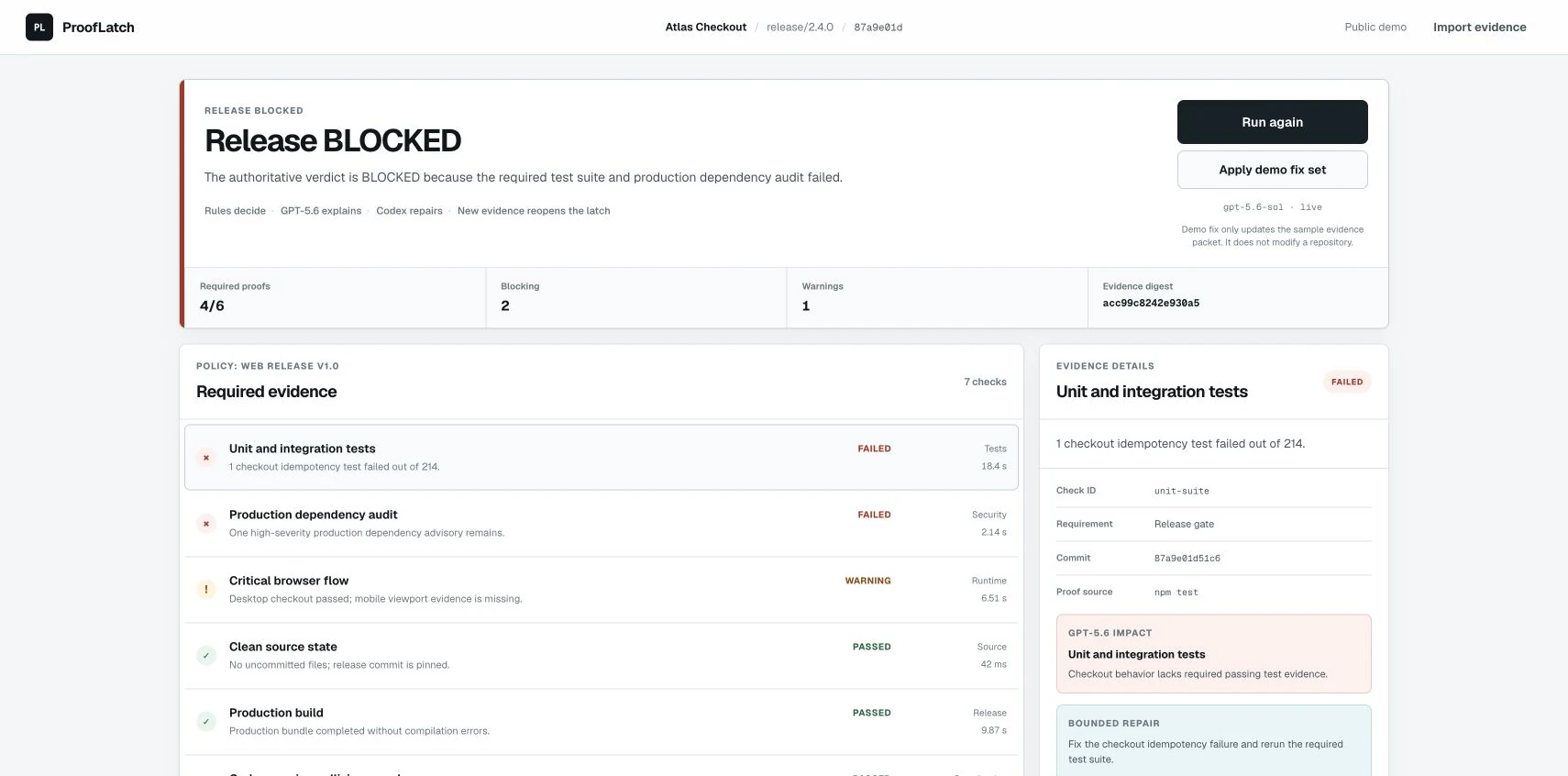
The evaluator checks required gates and source cleanliness first. Only then may the model translate those facts into plain-language risk and a Codex-ready repair brief tied to exact blocking check IDs.
The public judge path works signed out. The optional authenticated model path is separate and never changes the deterministic verdict.
That separation makes the product useful when the AI path works and safe when it does not.
A client cannot rename, omit or make a required check optional simply to obtain READY.
GPT-5.6 turns evidence into a clear risk summary while every reference stays attached to a real blocker.
Codex receives a focused brief, but a repair is not accepted until new evidence reopens the latch.
The SHA-256 digest binds the effective policy, supplied packet, evaluator version and assessment after capture. It is not a signature, trusted timestamp, source attestation or proof that a command actually ran. The demo fix is visibly a fixture swap.
Gatehold governs agent clearance, ExitCanary tests SaaS exit fidelity and AccessCrash tests whether a process remains humanly reachable.